

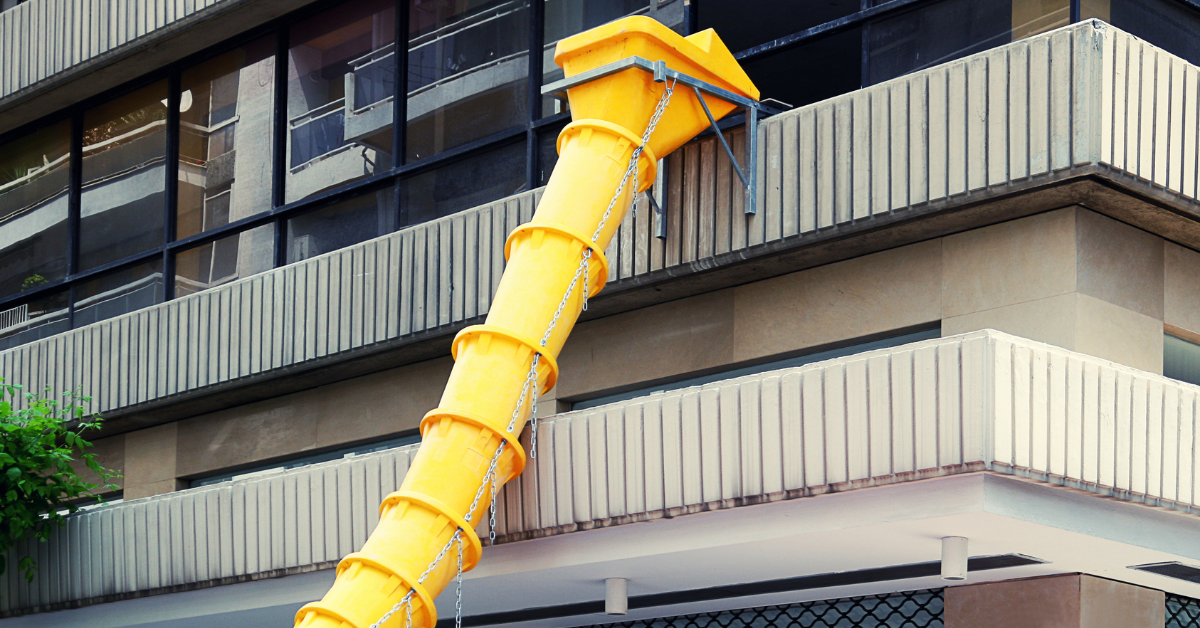
How do you plan to Handle Waste On Your Multi-Story Construction Site? The challenge of coordinating the moving parts in a high-rise building project or an interior, multi-floor remodel will compound at a physical rate. Moving large amounts of bulk structural waste back down to ground-level staging areas can be an extremely difficult task once you’ve begun stacking stories upward.
A faulty construction site debris solution that’s insufficient in vertical capacity can quickly lower overall workflow, create a hazardous work environment, and wipe out profit margins.
BinMan Construction project managers to formulate waste solutions designed to lower overhead. If you’ve spotted five of the tactical indicators listed below in your plan, you probably need a construction debris removal line.
Vertical Waste Hauling is Draining Your Active Labor Budget
You are overpaying labor if your elite framing, drywall, or masonry team loses significant portions of their shifts to physically throwing broken brick, drywall, or timber into bins, rolling the bins to the material lift, or hand-carrying the refuse down the stairs. It’s a terrible return on investment of skilled labor.
A designated construction site waste chute flips the switch:
- POINT OF ORIGIN
- AUTOMATED VERTICAL TRANSPORT
- OPTIMAL WORKFLOW
Waste is Backing Up on Upper Floor Layouts
Large accumulations within the confines of a structure will result in dropped workers, cluttered pathways that obstruct materials flow through the interior spaces of the job site, and obscured dangerous conditions that floor openings create, and a continuous high-capacity drop zone into the structure of each level facilitated by an external construction site waste chute “blows off’ the blockage in a structured and manageable manner that keeps you safe, compliant with OSHA house keeping regulations, and your floors and corridors clear.
The Project Material Lift Is Experiencing Severe Scheduling Conflict
On any project site with multiple levels, the material elevator or external hoist plays a role in moving large quantities of material. This elevator is critical for shifting large, heavy equipment and different shifts of workers back and forth, as well as for handling ongoing incoming shipments of structural materials. When your site’s material hoist is tied up moving a large collection of demo waste down to the ground, your construction process can be severely impacted.
This can lead to subcontractors sitting around at the bottom of a structure, which results in your projects falling far behind the targeted deadlines.

On-Site Airborne Dust and Debris Spillage Are Creating Compliance Penalties
Dropping chunks of old brick, rocks, or broken roof tiles from the openings of multiple levels down to the ground can create a dangerous situation for pedestrians below. Even careful disposal efforts can create an environmental risk, with airborne dust and scattered fragments being blown onto other nearby properties or public walkway areas.
A durable plastic or polyethylene debris chute is designed to contain virtually all forms of airborne particles as well as ensure that larger debris pieces go directly into the designated waste containment unit on the ground floor.
Foul Smells and Organic Pests Are Spreading Near Waste Accumulation Zones
The buildup of construction waste often takes place high up within a building while the project is in early stages, and this material naturally mixes with organic trash that is brought in by workers. Over the course of many weeks and months on a long commercial project, these organic materials may start to decay, creating unpleasant odors and attracting unwanted wildlife and insects. BinMan Construction’s professional debris removal includes optional regular high-pressure washing and cleaning services of the chute system.
High-Pressure Trash Chute Cleaning: Hot-water power washing, power cleaning trash chutes using the hottest water available, along with harsh industrial degreasers and neutralizers, will obliterate the caked-on mortar dust, slime, and grease. Keeping your trash drop system Sanitary, operable, and out of your workers’ way!
Frequently Asked Questions
A job on the second or higher floor is the widely cited benchmark for a heavy-duty trash chute, but anywhere there will be a lot of heavy hauling up and down stairways and elevator shafts, there’s going to be some immediate benefit.
Engineered, heavy-duty structural brackets clamp onto your work’s elements. Some typical mounting scenarios include reinforced concrete floor outriggers, window sill attachment straps, and concrete anchors into exterior scaffolding.
As workers’ debris (everything from fast-food wrappers to thick drywall dust to sticky mortar compounds) accumulates, the buildup causes wear and structural blockages within a work chute. Regular cleaning washes down these accumulated, gooey substances, eliminates offensive odor, and keeps the line sanitary.
Our technicians employ powerful high-pressure washers along with a variety of 360-degree spinning washing nozzles that blast away hardening dry compound dust, any underlying biological matter, and other sticky film residue as they scour down the vertical line.
Multiple crews on different floors can drop trash into the chute at the same time by inserting special interim hopper chute sections at those middle levels. Each drop will clear the line so that adjacent crews aren’t impeded.
Containing all the demolition debris inside of a trash chute prevents items from being able to bounce out of the trash removal stream and strike pedestrians and any ground crews working below.
High-density polyethylene (HDPE) pipe is widely preferred throughout the building trades because of its excellent wear resistance, flexibility even in extreme cold conditions, and significant impact strength; it will stand up well to large objects and heavy use without ever cracking or delaminating.
Multi-floor, commercial work, and large residential construction projects typically use our optional supplemental, multi-floor hopper units. Multiple internal teams can throw materials into the chute all at the same time on differing elevations without their activities affecting other work teams operating on a different floor level.
By securely containing building debris within a heavy-duty, exterior vertical disposal line, contractors are eliminating the chances of impacts with nearby pedestrians or ground-level workers and decreasing the risk of costly worker compensation claims.
When hiring BinMan Construction, you’re getting full service. Every job includes professional consultation and on-site design, certified assembly on your structure, and a complete post-project breakdown.
Construction debris chutes of 30 inches in diameter have become the widely utilized industry standard. They efficiently accommodate larger, bulky demolition, broken sheetrock sheets, and shovelfuls of heavy-site debris while reducing the possibility of a clog forming inside.
On an active, extensive job site, such as a multi-unit apartment building and for commercial structures with extensive interior floor plate area, it’s recommended to have your work chute professionally cleaned at intervals of between 4-6 weeks.